
How have the concerns of parents and carers in Scotland changed in the last 3 years?
In December 2025, I was delighted to hear that Parenting Across Scotland were recommissioning a piece of research I managed in 2024: the Parenting Evidence Review, a rapid review of the data, evidence and literature published over an 18-month period about the experiences of parents and carers in Scotland. Using third sector research, government commissions and academic work, the goal was to provide Parenting Across Scotland with evidence of the greatest concerns of parents and carers at that moment in time. The first evidence review considered all the data published in 2023 and the start of 2024. The recommissioned work in December 2025 asked us to consider the same parameters, but as they apply to data produced in 2025 and early 2026.
While each review should be read for the detail provided and voices of parents evident, this blog considers a comparison of the two reports to understand:
- what is changing in the research landscape around parents and carers?
- where are the gaps in participant profiles?
- how concerns may or may not have changed over time.
Research landscape
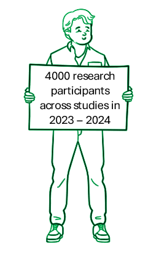
An examination of the participant sample highlights the different types of research conducted over the distinct two-year period.
 |
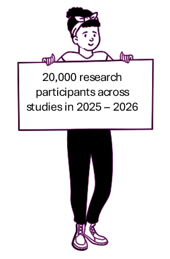 |
The 2024 report had a much smaller sample of parent and carer participants. The 2024 report considered mostly third sector evidence that spoke with parents about their struggles and concerns, raising awareness of the hardships they were facing. The 2026 report included more academic work that provoked questions about policy and service sustainability and two large evaluations commissioned by the Scottish Government and carried out by ScotCen that considered the impact of different support programmes. Inclusion of both quantitative and qualitative approaches increased the participant numbers.
Research participant profiles
Mothers, carers, adoptive parents, Black, minority ethnic parents and carers, families with disabilities and families with care experience were represented in both reports. Research with fathers seems to be gaining more traction, with greater representation in the 2026 evidence. However, no research with LGBTQI+ parents or carers exists in either the 2024 or 2026 evidence review. While this could be due to the short time frame for evidence sampling for both reports, other groups of parents and carers are represented which leads to the conclusion that this group remains underrepresented.
Themes
Both reports highlighted financial struggles as being at the heart of many other challenges faced by parents and carers, such as mental and physical health problems, debt and housing precarity. Participants across the reports highlighted struggles with stress, anxiety and isolation and parents and carers spoke about the exhaustion felt trying to balance their financial concerns with daily life.
Parents and carers across the two reviews raised concerns around the accessibility of childcare; they say it is still costly even with the funded hours, hours offered can be inconvenient particularly for parents and carers with shift patterns and spaces have limited availability in rural areas. A lack of childcare options, employment inflexibility or barriers to education perpetuated poverty-related struggles for some parents and carers.
The 2024 review centred experiences that families were facing, which were often very hard to hear.
“[My son] will have things that he needs. I have the bare minimum. I’ll have a deodorant, a shampoo, a conditioner, but again I’ll try and not wash my hair as often as I really should or would like to, because it’s too expensive. It’s horrible to think like this. It’s horrible to feel that I’m actually struggling in this way.” (Aberlour, How public debt and arrears are experienced by low-income families. Cited in Parenting Evidence Review 2024)
It considered the impacts of acute financial hardship and debt, housing precarity and the shortage of services. In contrast, the 2026 review was more evaluative due to the types of research commissioned in that year. For example, rather than consider the impact of the rising cost of living as the 2024 review did, it looked at how successful the current support, services and interventions were in assisting families facing poverty. The 2026 review considered the benefits of the 5 Family payments (Best Start Grants, Best Start Food and the Scottish Child Payment) and highlighted the positive impact it was having for parents and carers and where the support was still falling short.
Conclusions
A comparison of the two reports shows that while there has been progress in services and support that helps families over time, they are being helped to cope rather than being assisted to thrive. Ultimately, the comparison suggests that the challenge is no longer simply identifying what parents, carers and families need in Scotland, as both reviews show that this is well understood. Instead, the review shows that the next steps are ensuring that effective supports are accessible, flexible, whole-family targeted and resourced so that parents and carers can move from managing hardship and daily struggles and toward long-term wellbeing.